For many parents with a child in Year 5, the 11+ is now firmly on the horizon. It is natural to look for extra support at this stage, whether that is tuition, mock exams or holiday courses, all with the aim of helping your child feel confident and prepared.
What is sometimes less obvious is how important it is for all of this support to work together. Learning is not just about doing more. It is about how clearly ideas are taught, how progress is measured and how each stage links to the next. At KSOL, we see that consistency across teaching, practice and assessment plays a big part in how secure and confident children feel during 11+ preparation.
Different teaching styles
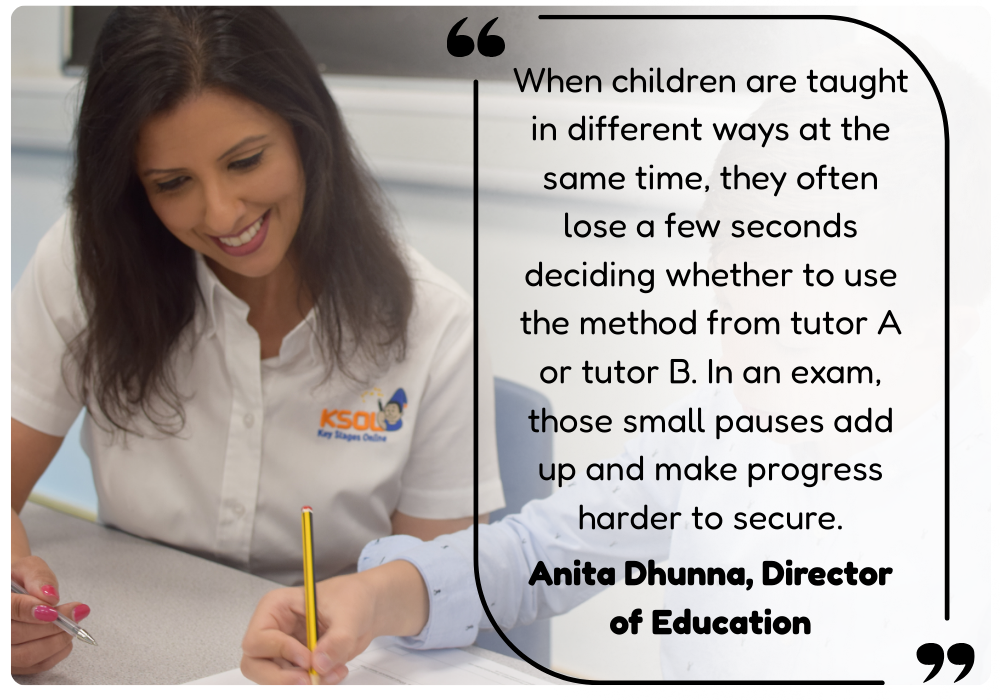
Every tutor or provider has their own way of explaining ideas, structuring lessons and giving feedback. None of these approaches are wrong, but when children move between several at once, they often have to adjust to new language, new methods and new expectations.
Mock exams and their impact on learning
Mock exams are a vital part of 11+ preparation, but they work best when they are part of a learning journey. A good mock exam does more than give a score. It shows where your child is confident and where more support is needed.
If a child sits mock exams with one provider but learns elsewhere, the results often stand alone. Teachers may not know exactly how the paper was written or which techniques were expected, so feedback can remain general.
When mock exams are designed alongside teaching, results can highlight skills that need attention, shape future lessons, reinforce techniques already taught and track progress over time. This helps children see mock exams as part of learning, not something separate from it.
What research shows
Research into tutoring by the Education Endowment Foundation shows that extra support can be helpful, but only when it is well organised and carefully monitored. Tutoring itself is not a guarantee of progress. What matters most is how clearly it fits with a child’s wider learning.
The same is true for mock exams. Their value comes not just from sitting the paper, but from how the results are understood and used to guide what happens next.
When change is needed
Children must always come first. If a child is unhappy or not progressing, it is right to review the help they are receiving. Cost, location and personal fit all matter, and taking time to research a provider carefully is important.
It is also worth remembering that relying on a single individual tutor can bring practical challenges. If that tutor is unavailable, learning may pause, and not every tutor has systems to track progress across subjects and assessments.
Why joined-up support matters
Anita goes on to say:
“When teaching, practice and mock exams work together, learning feels more connected. Lessons build on mock exam outcomes, feedback reflects familiar methods, and progress is easier to understand, helping children grow in confidence.”
When learning works as one joined-up journey, children feel more secure and better able to build confidence over time.
About KSOL
KSOL is an award-winning EdTech provider that supports families through 11 plus preparation with qualified teachers, structured learning and clear guidance, helping children feel secure as they progress.